


Why Change Feels So Personal
And what a silverware drawer has to do with wellness design. By Rachel Schemmerling|Timeless Living
And what a silverware drawer has to do with wellness design.
There is something deeply human about not liking change. Even when the change is small. Even when it is helpful. Even when it is beautiful. Especially then. Lately, I have been living this in real time.
Many of you know I recently stepped into a new role as Office Manager and Outreach Coordinator at our church. I walked into a space that had history. Familiar rhythms. Things had been where they were for years — paper, folders, bulletin boards, tables, communication flows, unspoken arrangements. And with the support of leadership, I was invited to make changes that would help the space function better and feel more welcoming. Some of those changes were well received.Some were not.
And isn't that always the way?
The resistance is rarely about the thing itself. It is about what that change disrupts. Routine. Familiarity. Muscle memory. Comfort. A sense of control.
I used to rearrange furniture in my home all the time. Not because something was broken — but because I could feel when something no longer fit. The room needed better flow. Better energy. A breath of fresh air, or sometimes just a reason to look up.
I loved it. My family? Not always.
Because even when the room looked and functioned better, it felt unsettling at first. The lamp was no longer where they expected it. The chair had moved. The path through the room had shifted. Suddenly everyone was lost. However, over time, it became comfortable again.
Think about your silverware drawer. You can find it in the dark. You reach for it without thinking — your body simply knows. Your brain has mapped your home. You move through it by habit, by repetition, by the deep trust that things stay where they have always been.
Until they don't. And then something as minor as a moved drawer can feel irrationally frustrating. Not because it is wrong. Because it is unfamiliar.
That is true in homes. In workplaces. In relationships. And yes — in wellness design.Because good design is not about making things pretty. It is about thoughtful, intentional change in service of a better life.
A concept I have carried for decades
Years ago, long before interiors and long before Timeless Living, I was studying Hospitality Management. It was there I first heard the phrase continuous improvement — the ongoing practice of making small, incremental changes to improve function, comfort, and experience. Not dramatic overhauls. Not chaos for the sake of change. Just steady, thoughtful refinement. I never stopped applying it to everything I do. To spaces, and systems and to the way I help people think about their homes.
Wellness design asks the same questions continuous improvement always has:
Does this room support the way we actually live?
Does this system make daily life easier — or harder?
Does this space create calm, or does it create friction?
Are we keeping something because it works… or simply because it has always been there?
That is where real change begins. Not with disruption for its own sake — but with honest awareness.
And a gentle reminder, for anyone navigating change right now — in their home, their work, or their community: being sensitive to the people affected by change matters deeply. Resistance is not always stubbornness. Sometimes it is grief. Sometimes it is habit. Sometimes it is simply the discomfort of the unfamiliar. That is worth honoring.
But it is also worth remembering:
Change is not always criticism. It is not always personal. Change is often care in motion — an attempt to make something work better, flow better, feel better, support people better. When we zoom out and look at the bigger picture, that is usually the whole point. Not change for the sake of change. Change in service of something better.
What will you change in your home today, not for the sake of change but for something better? Is there a space in your home that you've been tolerating instead of improving? Hit reply and tell me about it. Sometimes just naming it is the first step.
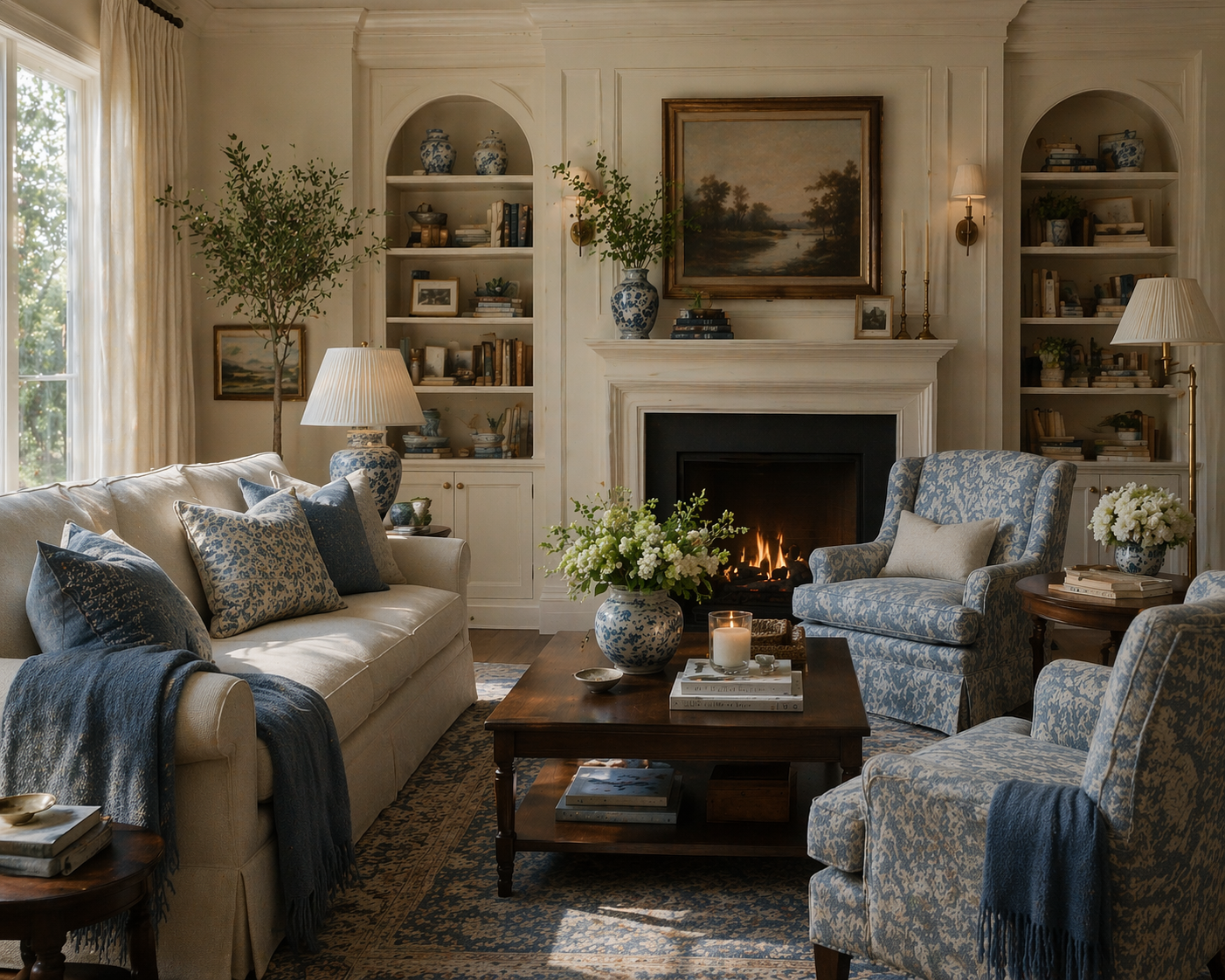
Something is Changing in the Way We Live at Home
By Rachel Schemmerling| Timeless Living
There’s a quiet shift happening in the world of interior design.
For years, the conversation centered around optimization—smarter systems, better performance, spaces designed to help us do more, be more, function more efficiently. And for a time, that made sense. We were building homes that could keep up with the pace of our lives.
But something is changing.
The more I sit with it, the more I realize…wellness design isn’t just a passing trend. It feels like a necessary correction. A turning inward. A softening.
What’s emerging now isn’t about more. It’s about less—less stimulation, less noise, less visual demand. And in its place, something we’ve been missing: a sense of safety.
Designing for How We Feel
Design is beginning to center around the nervous system.
And while that language may sound technical, it’s actually something we all recognize instinctively. It’s the difference between walking into a room and immediately exhaling…versus walking into a space that looks beautiful, but never quite lets you settle.
That subtle, often unspoken feeling? It’s becoming the focal point.
Homes are being shaped not just for aesthetics or efficiency, but for emotional repair. For sensory calm. For a deeper kind of ease that you feel in your body before you can explain it with words.
The Shift Toward Quiet
We’re seeing a move away from high-stimulation environments—harsh lighting, constant input, visual clutter—and toward softer, more layered spaces.
Diffused light instead of overhead glare.
Muted tones instead of high contrast.
Natural textures instead of synthetic shine.
Homes are becoming quieter. Not just in sound, but visually and energetically.
It’s a shift toward low sensory input…spaces that don’t ask anything of you when you walk in, but instead offer something back.
A Deeper Connection to Nature
What was once called biophilic design is evolving into something more immersive.
It’s no longer just about adding a few plants to a room. It’s about creating a genuine connection to the natural world—through light, through materials, through form.
Wood. Stone. Linen. Natural light that shifts throughout the day.
These elements ground us in a way that feels almost instinctive. They remind the body of something it already knows.
Technology That Fades Into the Background
Technology is still evolving—but in a quieter, more supportive way.
Instead of demanding our attention, it’s beginning to work in the background. Adjusting lighting. Regulating air quality. Supporting better sleep.
It’s less about flashy “smart homes”…and more about intuitive homes. Spaces that respond to us without interruption.
And sleep—something long pushed to the margins of design—is finally being brought to the center.
Bedrooms are becoming sanctuaries in the truest sense. Cooler. Darker. Quieter. Designed not just for rest, but for restoration.
Spaces for Restoration, Not Performance
Even the way we think about wellness at home is shifting.
There’s less emphasis on intensity and performance—and more focus on recovery, longevity, and care.
Yes, we’re seeing things like saunas and cold plunges. But more importantly, we’re seeing spaces designed simply to restore.
Quiet corners. Gentle routines. Outdoor spaces that are no longer just for entertaining, but for connection—whether with others, with nature, or with yourself.
Places where you can step outside and actually feel a shift in your body.
A More Intentional Way of Living
Underneath all of this is a growing awareness: our homes are not neutral.
The air we breathe.
The materials we touch.
The light, the sound, the energy of a space.
These things shape us—often in ways we don’t consciously register.
And so, design is becoming more thoughtful. More intentional. More attuned to long-term well-being.
What This Means (At Least to Me)
This conversation has been unfolding for a while now, but it feels like we’re finally finding the language for it.
Because for me, this has always been the missing piece in interior design.
Not just how a space looks…
but how it feels to live inside it.
The industry might call this nervous-system-focused design.
But honestly, it feels much simpler than that.
It feels like a return.
To homes that support us in quiet, necessary ways.
Homes that allow us to soften.
To exhale.
To let down our hair at the end of the day.
And maybe…that’s what we’ve been needing all along.
I’d love to know—what part of this shift resonates with you most?
Is there one small element you feel drawn to explore or bring into your own home?

What Old China Taught Me About Collecting
March 17th has always felt like a special day to me. Yes, I’m Irish, so there’s that. But it also happens to be my sweet dog Ginger’s birthday—she’ll be six this year. A perfectly good reason to celebrate something small and joyful.
Which feels fitting, because this week I’ve been thinking about collections.
For me, the thing I’ve always been drawn to—almost without trying—is china. Not one pattern. Not one maker. Not a carefully matched set. I love all of it. Transferware, florals, delicate gold rims, the occasional strange little pattern that somehow still feels charming. There is something about old china that feels deeply human. It was once chosen carefully, registered for when someone got married, placed on a table for holidays and Sunday dinners.
When I owned my home furnishings consignment shop, women would come in carrying boxes of the china they had registered for decades earlier. Their daughters didn’t want it. Their sons certainly didn’t want it. And the truth was, most buyers didn’t want it either. Formal china doesn’t fit neatly into modern life. Most pieces can’t go in the dishwasher, and few of us are setting twelve-piece place settings for dinner anymore. But I could never see those pieces as obsolete.
To me, they were beautiful objects waiting for a new purpose.
These days I love wandering estate sales and antique shops, picking up one-offs here and there. Not full sets. Just pieces that catch my eye. In fact, just last week a lovely client gave me two beautiful soup tureens that had been left behind in a property she was renovating. I absolutely love them.
A soup tureen might have once been the centerpiece of a formal dining table. But today? It might hold rolled hand towels in a powder room. It might become a bowl for soaps by the sink. I can picture one with English ivy spilling over the sides on a windowsill, or filled with forced bulbs in early spring.
China adapts beautifully if you let it.
A single teacup can become a tiny nightlight. Three stacked and glued together can become a charming candle holder. A sugar bowl might hold jewelry on a dresser. The possibilities are endless—and if you’ve ever wandered down the rabbit hole of Pinterest looking for ideas, you know exactly what I mean.
But collections require a little wisdom too.
As Gen X’ers, many of us grew up watching our parents and grandparents collect… well… everything. Entire cabinets filled with Hummels. Shelves of commemorative mugs. Rows of porcelain dolls with curly hair and crinoline dresses. Disney memorabilia that multiplied quietly over decades.
Sometimes those collections became less about joy and more about sheer volume.
And eventually someone else inherits it all.
I’ve come to believe that a good collection is a restrained one.
A collection should be just enough to make you smile when you see it. Enough pieces to feel personal and interesting. Enough to bring texture and story into your home.
But never so much that you’re suffocated by it.
The moment you find yourself building extra storage for the things you own, it may be time to pause and ask a few honest questions. Collections should be curated, loved, and displayed—not boxed away or multiplying quietly in closets.
A thoughtful collection adds character to a home.
An unchecked one becomes clutter.
So I’ll keep collecting china. A teacup here. A bowl there. A soup tureen rescued from a renovation. Little pieces with a past that can still have a place in a home today.
Just enough to bring joy.
And not a piece more.

A new kind of fresh start
By Rachel Schemmerling
There’s something about crossing the threshold from February into March that usually feels different in a way that’s hard to fully explain—but you feel it. But this year, it feels… different. Because even as the light begins to shift, and the days stretch a little longer, the world itself feels heavy. Unsettled. Loud in ways that are hard to ignore. And it can feel strange—even uncomfortable—to talk about fresh starts and seasonal shifts when so much feels uncertain. And yet… both things can exist at the same time.
It doesn’t mean winter is over. We know better than that. Especially here in the Northeast. There will still be cold mornings, maybe another snowfall, and days where everything feels a little gray and slow. But something is shifting, even if it’s subtle. The light lingers a little longer in the evening. The air softens. And underneath everything—the noise, the heaviness, the unknown—there’s a quiet, steady knowing:
We’ve made it through the deepest part of the season. And maybe this year, hope looks a little different. Maybe it’s quieter. and more intentional. The kind that doesn’t demand big declarations or dramatic change—but simply invites you to keep going.
A Different Kind of New Beginning
For me, this has always been the true beginning of the year. I have never been able to relate the new year new you mentality of January. January asks too much of us. It pushes structure and goals at a time when everything in nature is still resting. It’s no wonder it can feel disconnected. But March… March meets us where we are. It doesn’t rush. It doesn’t demand. It simply begins to wake things up—slowly, naturally, and in a way that feels real. And maybe that’s what we need right now. Especially now as the world around us feels chaotic.
March doesn’t push a complete reinvention. There is no pressure to “start fresh” in a perfect way. But permission to begin again—gently. To come back to what matters. To create steadiness where we can.
A Season to Reset — In Life and at Home
This time of year always brings me back to the idea of editing. Not in a harsh, tear-it-all-apart way—but in a thoughtful, intentional one. Room by room. Area by area. A willingness to look at what is—and decide what still belongs. Because over time, we don’t just accumulate things. We accumulate noise, expectations, commitments, and the emotional weight of it all. And eventually, it all starts to feel like too much. Spring invites us to release some of that—not all at once, and not perfectly—but steadily. At home, this can be simple. Clearing surfaces that have slowly collected clutter. Opening a closet and noticing what no longer fits your life. Walking through your space and asking—what feels calm here, and what feels heavy? There is something deeply grounding about a space that supports you. Not empty. Not sterile. But intentional.
Especially when the world outside feels uncertain, your home can become a place that steadies you. A place that holds you, rather than overwhelms you.And that matters more than ever.
Before You Add Anything New…
After clearing, there’s always the temptation to immediately refresh—to fill the space again, to create change quickly. But this is where I always encourage a pause. Because real transformation doesn’t start with adding. It starts with understanding. So often, we try to fix how a space feels by layering more into it. More decor, more furniture, more “updates.” But if the foundation isn’t right—if the space doesn’t function well, or reflect your life—it never quite works. I see it all the time: A beautiful living room no one uses. A perfectly styled dining room that sits empty. A bedroom filled with lovely pieces that still doesn’t feel restful. What we’re really craving isn’t more It’s alignment.
Your home should support your life—not just visually, but practically and emotionally. Especially now. That might mean rethinking how a room is used.
Moving furniture to create better flow. Choosing fewer, better pieces that truly serve a purpose. Or creating even a small corner that feels like a place to exhale. It doesn’t have to be expensive. It just has to be true to you.
Coming Back to Yourself
This season isn’t about becoming someone new. It’s about coming back to yourself—with more clarity, more intention, and a deeper understanding of what actually matters. We made it through the heaviness of winter. And even in a world that feels uncertain, that still counts for something. Maybe this isn’t a bold, bright beginning. Maybe it’s a quieter one. A steadier one. A more grounded one. And maybe that’s exactly what we need. A place to land. A way to begin again—without pressure. A return to what feels real and true in your own life.
Come home to yourself.