

Love, In Real Life
By Rachel Schemmerling| Timeless Living
There’s a song lyric that comes back to me often:
“What the world needs now is love, sweet love.”
Not the dramatic, movie-scene version of love.
The real-life version.
The kind that shows up in ordinary days, in small choices, in how we take care of ourselves when no one else is paying attention.
Midlife Is When Many Women Realize Something Important
Many women reach midlife and quietly recognize:
“I’ve been very good at caring for other people.
I haven’t always been as good at caring for myself.”
Not because you didn’t want to.
Because life was full. Responsibilities were real. People needed you.
But this season of life invites something different.
Not less giving.
Just more balance.
What Self-Love Actually Looks Like (In Real Life)
Self-love is not perfection.
It’s not constant self-improvement.
It’s not expensive routines or complicated systems.
It’s often very practical:
Eating real food
Resting before you are exhausted
Speaking to yourself respectfully
Allowing yourself to want comfort, beauty, and ease
Letting “good enough” actually be enough
A simple rule:
If you wouldn’t say it to someone you love, don’t say it to yourself.
Making Love Tangible
Love is something you can do.
Not just something you feel.
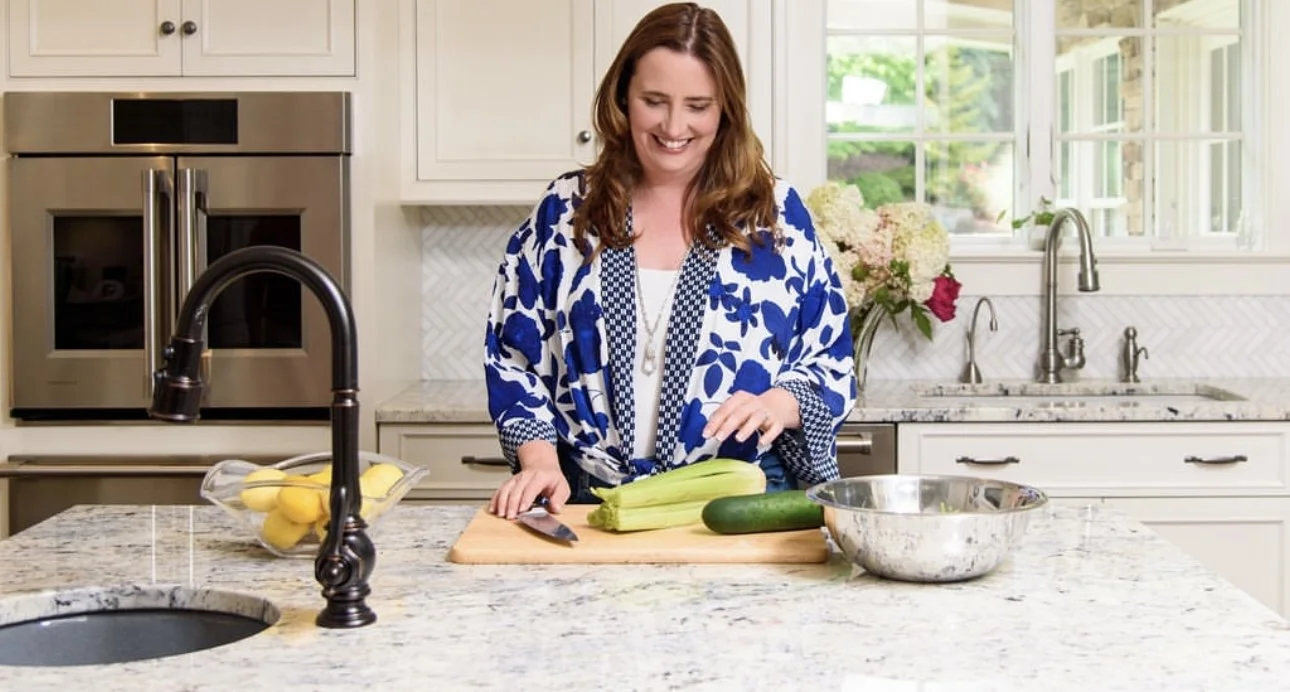
Sometimes it looks like cooking.
Sometimes it looks like sitting down for 10 minutes in a quiet house.
Sometimes it looks like making something sweet because it feels nurturing.
Strawberry Vanilla Yogurt Parfait
Why this recipe works:
Naturally sweet. Protein-rich. Takes five minutes. Feels a little special without being complicated.
Ingredients
Greek yogurt (plain or vanilla)
Fresh strawberries
Honey or maple syrup (optional)
Granola or chopped nuts
Optional: chia seeds or cinnamon
Instructions
Layer yogurt and strawberries in a bowl or glass.
Top with granola or nuts for crunch.
Add a drizzle of honey or maple syrup if desired.
Sprinkle chia seeds or cinnamon if you like.
Eat slowly. Enjoy fully. Feel nourished.
Try This This Week…
Once a day, pause and ask:
“What would feel supportive to me right now?”
Not productive.
Not efficient.
Supportive.
Then do that, if you can.
Final Thought
Love is not something reserved for other people.
It belongs in your routines.
Your home.
Your kitchen.
Your inner voice.
And you are allowed to receive it — from yourself — every single day.
Why Creating a Sanctuary at Home Matters More Than Ever
By Rachel Schemmerling|Timeless Living
There’s a shared feeling many people are carrying right now, even if we don’t talk about it openly.
Life feels loud.
The news cycle moves fast. Opinions are strong. Conversations can feel charged. Social media rarely lets us rest. Even when we try to disconnect, the emotional tone of the world has a way of following us.
No matter where you stand politically or culturally, many people are experiencing the same underlying response: nervous system fatigue.
We are overstimulated, emotionally saturated, and craving spaces where we can simply exhale.
This is why the idea of home as sanctuary is no longer a luxury — it’s essential.
Home as a Nervous System Reset
When we think of design, we often think first about aesthetics. Colors. Furniture. Layout. Style.
But the deeper function of design is emotional.
Our surroundings shape how our bodies respond to stress. A cluttered or visually chaotic space can subtly increase anxiety, while intentional design choices can signal safety and calm to the brain.
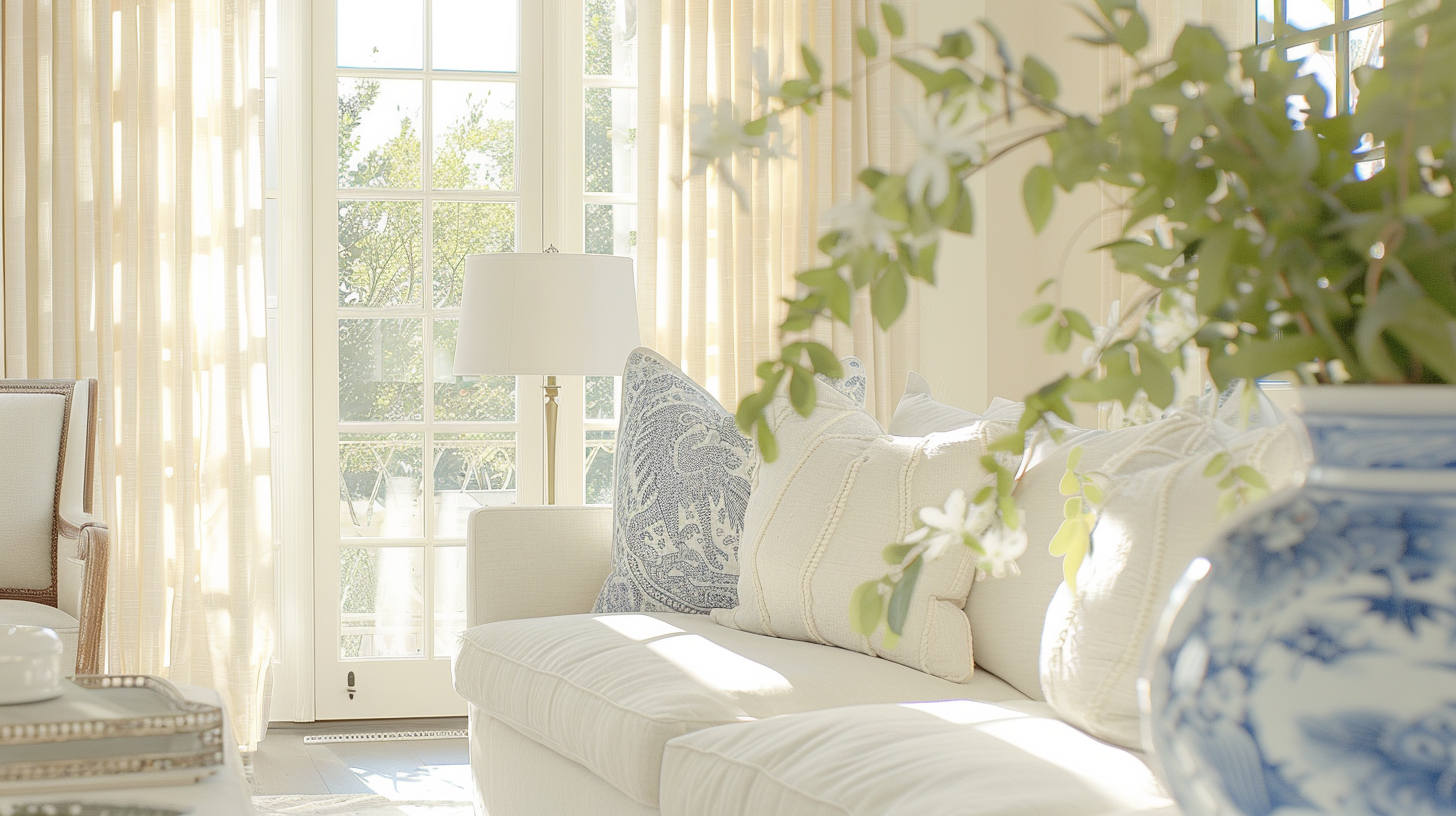
Soft lighting tells the body to relax.
Organized spaces reduce cognitive overload.
Natural textures and muted tones help regulate mood.
Personal rituals grounded in the home create predictability — something our minds crave in uncertain times.
A sanctuary does not require a perfect house or expensive furniture. It begins with intention.
A Client Story: The Power of One Intentional Space
One client came to me feeling emotionally drained. She described her home as “another source of overwhelm” rather than relief. There was nothing dramatically wrong with the space, but it lacked areas designed for restoration.
We focused on a single room.
By simplifying visual clutter, adjusting lighting, incorporating comforting textures, and creating a small daily ritual corner, her experience of home shifted dramatically.
She later shared that this small transformation helped her feel more emotionally grounded and less reactive to outside stress.
Design did not change her life circumstances — but it changed how supported she felt within them.
Sanctuary Is for Everyone
The need for rest, comfort, and emotional safety at home is universal. It crosses political views, belief systems, and lifestyles.
We all need a place where we are not performing.
Not defending.
Not reacting.
Just being.
Sanctuary spaces allow us to show up more fully in the world because we have somewhere to replenish ourselves.
Where to Begin
Creating a sanctuary doesn’t have to happen all at once. It starts with small, thoughtful changes:
• Choose one area of your home dedicated to calm
• Reduce visual clutter
• Incorporate softer lighting
• Add comforting textures like throws or natural materials
• Establish a simple daily ritual connected to that space
These shifts signal to your body that it is safe to rest.
A Community Forming Around Intentional Living
This philosophy is also what inspired the Ginger Jar Society — a growing circle of women who are exploring how home, lifestyle, and intentional living can support healing, connection, and personal growth.
When we gather around these ideas, something powerful happens: we realize we are not alone in wanting a softer, more meaningful way to live.
Final Thoughts
The world may not slow down anytime soon. But we can create environments that help us meet it with greater steadiness.
Home can be more than shelter.
It can be the place where we return to ourselves.
And that, perhaps, is one of the most important forms of care we can offer in these times.

Thirteen Years Ago Today, Everything Changed
Okay… you’re probably thinking:
“Rachel… what is with all this slow living stuff? The tea? The wintering?
The wellness talk?”
Like… are we living in a cottagecore Pinterest board now?
Do I need to start wearing linen aprons and making homemade jam? And honestly—I get it. Because a few years ago, I would’ve rolled my eyes a little too. But here’s the truth: This shift didn’t come from some trend I wanted to follow.
It came from my real life.And actually… today is one of those days that makes it all feel even more real.
Because today is my 13-year anniversary of being diagnosed with MS.
Like actually on this day—thirteen years ago—I was in a hospital hearing words that would change my whole life.
And what’s wild is… one year to the day after that, I was sitting at my first well visit—pregnant with my second child.
I remember thinking, how is this even possible?
Because after that diagnosis, I truly didn’t know what my life would look like. I didn’t know what my body would allow. I didn’t know if I would ever feel steady again. I didn’t know if I’d have another baby… or honestly, if I would ever feel like “me” again.
So yes. Today holds a lot. And here’s the part I want to say without sugarcoating it:
life with this disease is hard. Pain is constant. It’s not always visible, but it’s there. And there are days where I have to dig deep and show up anyway.
But I’ve learned things. Real lessons. The kind you don’t get from a quote on a mug.
And that’s what has changed the way I design.
That’s what changed the way I live.
That’s what shifted everything.
At some point—without even realizing it—I stopped designing homes that were just “beautiful,” and I started designing homes that actually supported people.
Because life gets real.
And it gets real for everyone. I know this is not just my hardship alone.
We are all dealing with something.
Something heavy. Something stressful. Something private. Something we don’t post about.
And if you’re walking around thinking you’re the only one struggling with what you’re carrying…
You’re not.
You’re not unique in your pain, your overwhelm, your anxiety, your exhaustion, your grief, your health stuff, your relationship stuff, your “too much on your plate” stuff.
Someone else is holding something similar—worse or better-- doesn’t matter—because it still counts.
It still impacts You.
And it still affects how you function inside your own life.
That’s why I started talking about things like wintering and wellness
and the idea of living slower.
Not because it’s cute.
Because it’s necessary.
What I’ve come to believe—deeply—is this:
Home is where we pull ourselves back together.
Home is where we heal.
Home is where we recover from the world.
We can’t control everything out there.
We can’t fix what’s happening everywhere.
We can’t magically make life stop being intense.
But we can create an environment that supports us while we move through it.
Because when your home is chaotic, demanding, cluttered, draining…
it becomes one more thing that takes from you.
And when your home is calm, intentional, soothing, and set up for how you actually live…
it gives something back.
It doesn’t solve every problem.
But it helps you breathe again.
And for me—this is personal.
Because when my body feels heavy…
when I’m in pain…
when my energy disappears…
when I’m trying to be a mom, a wife, a business owner, a human…
home is where I comfort myself.
It’s where I exhale.
It’s where I soften.
It’s where I recharge enough to go back out and do it again.
And I want that for you too.
I’ve watched this happen with clients over and over:
The mom who feels like she’s holding the whole family together suddenly has one space that feels like it’s holding her.
The woman navigating illness or burnout finally has a home that isn’t fighting her every day.
The couple that’s been on edge starts feeling softer simply because their space stops triggering stress.
The person who “can’t relax” learns they actually can… they just needed a space built for nervous system calm.
And listen… I’m not saying a paint color fixes your life.
But I am saying the way your home feels matters more than we’ve been taught.
Because the world is loud.
And busy.
And demanding.
And honestly… a lot right now.
So if you’ve been wondering why I’ve been talking about tea and slow mornings and cozy spaces and “sanctuary”…
It’s because I’ve learned something I can’t un-know:
The home isn’t just where you live.
It’s where you recover from living.
And you deserve that.
You deserve a home that helps you carry what you’re carrying.
Even if you don’t know where to start.
Even if you think you “should” be able to power through.
Even if you’ve told yourself “it’s not that bad” for years.
Because this is not about perfection.
It’s about support.
And that’s what I’m here for.
And one more thing, because it matters today…

Wintering, Hygge, and the Quiet Work Beneath the Surface
We hear the word hygge a lot this time of year. It’s the idea of making winter cozy—warm light, soft blankets, candles, and small comforts. The Danish Hygge helps winter feel more pleasant in our homes.
But wintering is something a little different.
Wintering is about allowing ourselves—and our homes—to slow down. It’s permission to rest more, expect less, and stop pushing through this season like it should feel the same as summer. It’s about letting our spaces support us instead of asking us to keep up.
Winter isn’t a lack of productivity.
It’s a pause we actually need.
And even though it can feel long, winter is temporary.
As of the date this is written, there are just 59 days until the first day of spring. That’s it.
Not forever—just a season we’re moving through.
Think of a seed beneath the soil.
Nothing about it looks productive from the outside. And yet, everything essential is happening. Roots are forming. Strength is gathering. Life is preparing to rise.
So are you.
Wintering allows us to germinate—to gather energy, clarity, and intention beneath the surface. And when the ground begins to warm, we don’t emerge the same. We emerge ready.
This is why, as we inch closer to spring, it’s natural to feel inspired to shift things up—especially in our homes. Moving furniture. Editing what no longer feels aligned. Letting go of heavy, stagnant winter energy.
Bring in refreshing colors, light, and flow.
These changes are not superficial.
They are deeply connected to our well-being.
Our spaces hold energy. When we clear, soften, and refresh them, we signal to ourselves that a new season is arriving—and that we are ready to meet it.
So if you feel quieter than usual, honor it.
If you feel the urge to nest, listen.
If you feel a spark of inspiration stirring beneath the surface—trust it.
You are not behind.
You are wintering.
And just like the seed, you are preparing to break through.
Spring is coming.